More words and short combinations
Words, gestures, naming, and back-and-forth exchanges may become more varied and purposeful.
02 · A SEASON OF DISCOVERY
18 months–3 years
Toddlerhood reshapes the family day. Language expands, movement becomes bolder, routines matter more, and food, play, sleep, and feelings can all change at once. A flexible record can follow those shifts without holding on to infant trackers that no longer help.
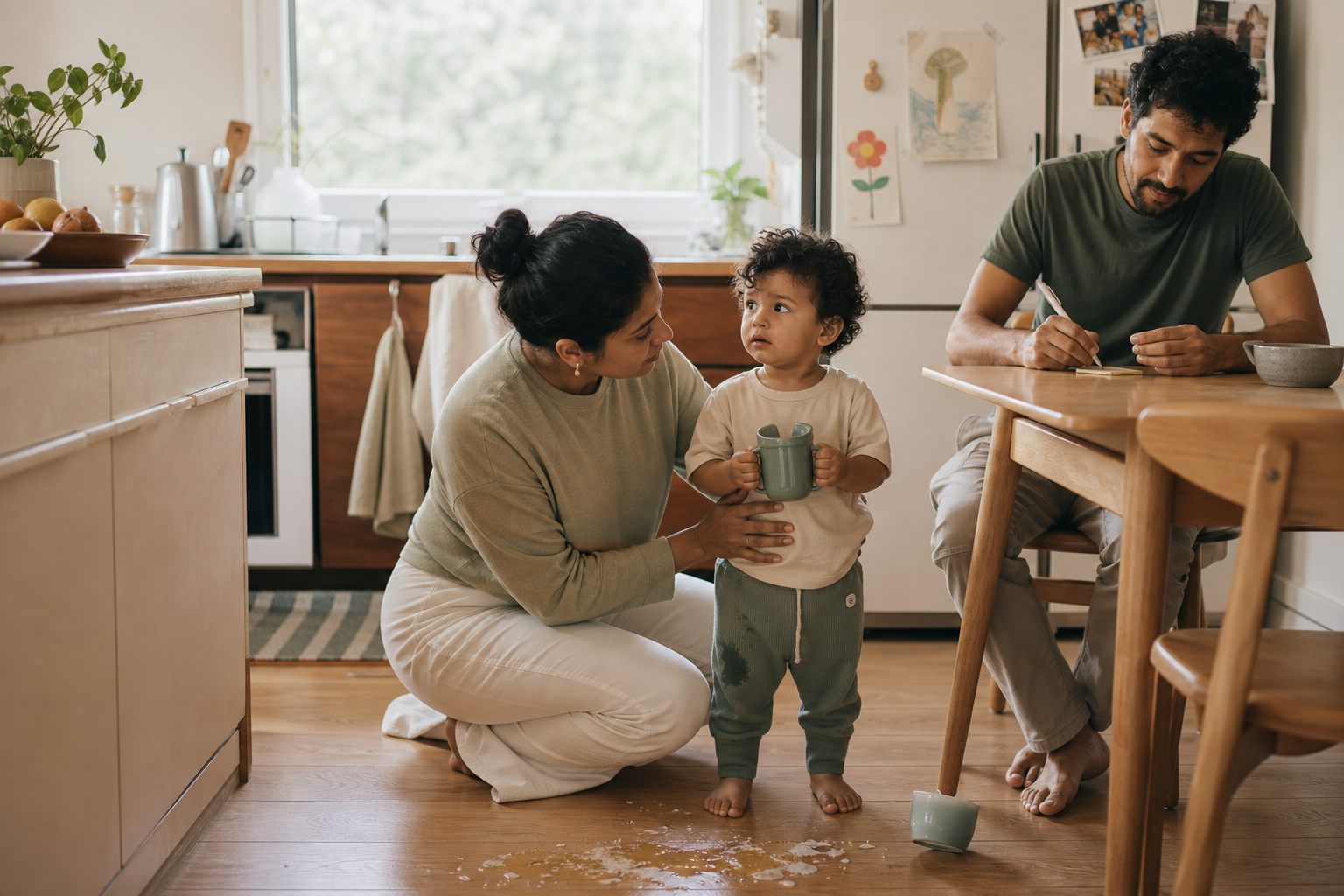
A FAMILY STORY
For several mornings, their toddler became overwhelmed when breakfast arrived in the wrong cup. His parents first remembered only the tears. Then they began writing down what happened just before them: a hurried wake-up, a new daycare drop-off, and a hard transition into the kitchen.
The notes did not make every morning easy, but they helped the family see that predictability—not the cup itself—was what he needed. They started offering two simple choices and giving him a little more time. Weeks later, the story they remembered was not a tantrum. It was the season he began finding words for what felt too big.
THIS SEASON, IN PLAIN LANGUAGE
Between 18 months and 3 years, CDC milestone checklists include social-emotional, language, cognitive, and movement skills. Children develop at different rates; concerns deserve a conversation, not a comparison.
Words, gestures, naming, and back-and-forth exchanges may become more varied and purposeful.
Toddlers may show affection, check for a caregiver, notice when someone is upset, or begin joining play.
Copying chores, using objects in new ways, and simple pretend play can reveal how learning is changing.
Predictable routines can help children know what to expect while families notice what supports the day.
Keep the boundary clear: developmental information can help families notice and prepare questions. It cannot diagnose a child or replace individualized guidance from qualified professionals.
HOW THE APP MAKES THIS POSSIBLE
Apply an age-aware care stage, keep food and routines visible, add activities or mood when useful, and preserve infant history without crowding today’s screen.
CONTINUE THE JOURNEY
The links here are selected for this stage. They deepen the topic instead of sending every family into the same general library.
See plain-language examples across communication, learning, movement, and relationships.
Read more →FOOD & FEEDINGRemember preparation, repeat exposures, reactions, and questions for the pediatrician.
Read more →FAMILY STORYA reflection on making room for the priorities that come next.
Read more →