Interests, effort, and school experiences
A child’s questions, preferred activities, challenges, and proud moments add context beyond grades.
03 · THE SCHOOL-YEAR SEASON
4–10 years
School, friendships, interests, routines, health questions, family changes, and growing independence begin to overlap. Childhood is not one checklist. It is a long season in which the details worth preserving increasingly belong to the child’s own story.
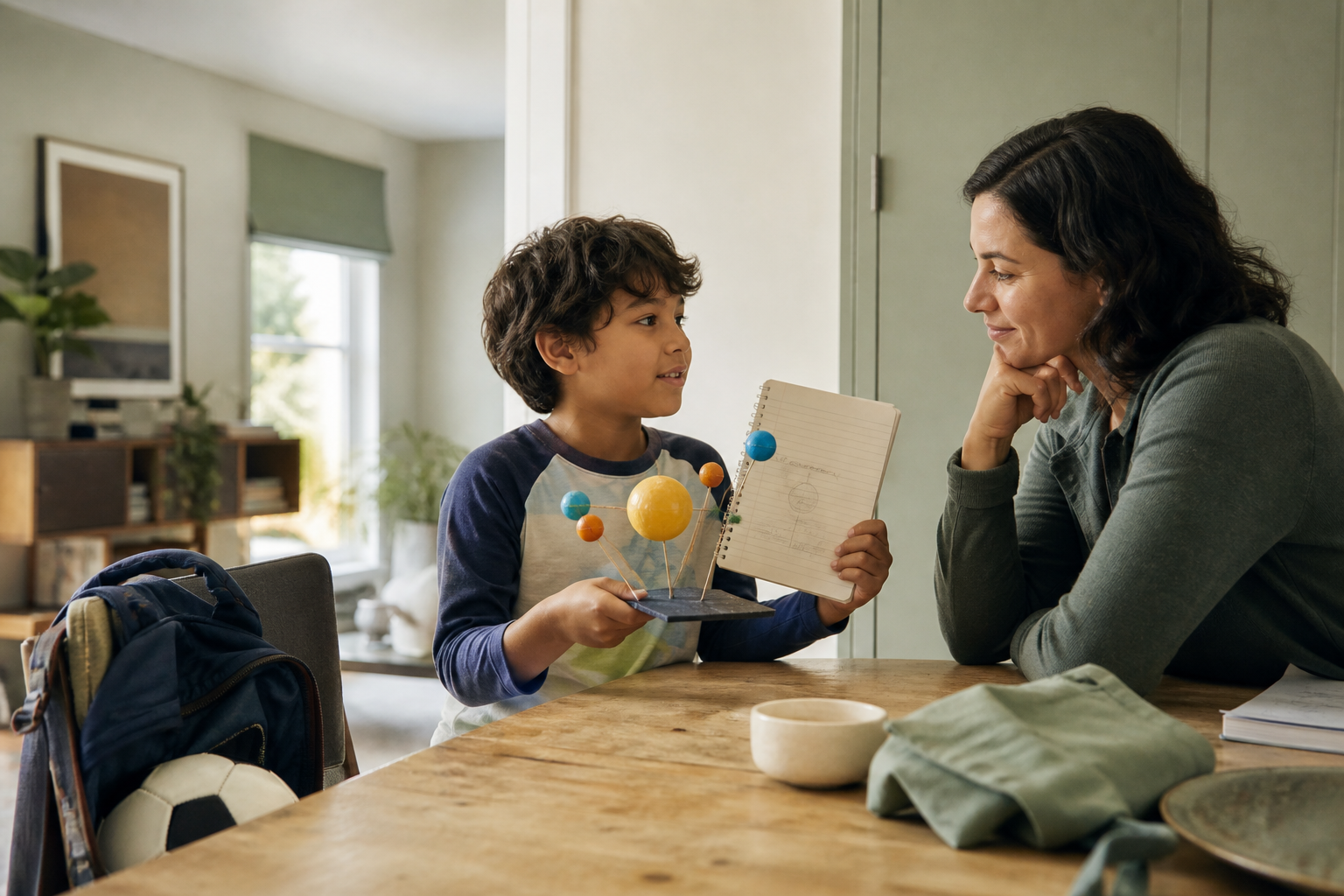
A FAMILY STORY
After school, Mateo placed a lopsided model of the solar system on the kitchen table and explained every planet before anyone could ask about his score. His mother noticed how confidently he spoke about something he had struggled to finish—and saved a photo with one sentence about the pride in his voice.
Months later, during a difficult stretch at school, that small record reminded both of them that progress was not limited to a report card. It gave Mateo a moment he could point to himself: evidence of an interest, an effort, and a capability that already belonged to him.
THIS SEASON, IN PLAIN LANGUAGE
CDC’s early milestone checklists end at age 5. During the school years, it is more helpful to observe patterns in daily life and bring questions to the child’s pediatrician, school, or care team than to extend an infant-style checklist.
A child’s questions, preferred activities, challenges, and proud moments add context beyond grades.
Peer relationships become more important, and family conversations can help preserve what the child shares.
Self-care, household roles, decision-making, and managing belongings may gradually shift toward the child.
Patterns can be useful to discuss, but the app should organize observations rather than interpret them.
Keep the boundary clear: developmental information can help families notice and prepare questions. It cannot diagnose a child or replace individualized guidance from qualified professionals.
HOW THE APP MAKES THIS POSSIBLE
Quiet early-care trackers and bring forward appointments, routines, school notes, health history, goals, photos, and the memories the child may want later.
CONTINUE THE JOURNEY
The links here are selected for this stage. They deepen the topic instead of sending every family into the same general library.
A reflection on noticing without turning childhood into a report.
Read more →APPOINTMENTSGather observations and questions before the details disappear into a busy week.
Read more →DIFFERENT NEEDSWhy a family record should respond to the child rather than force one path.
Read more →